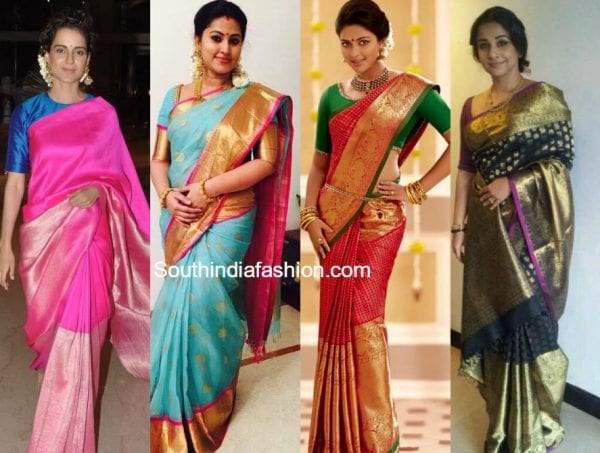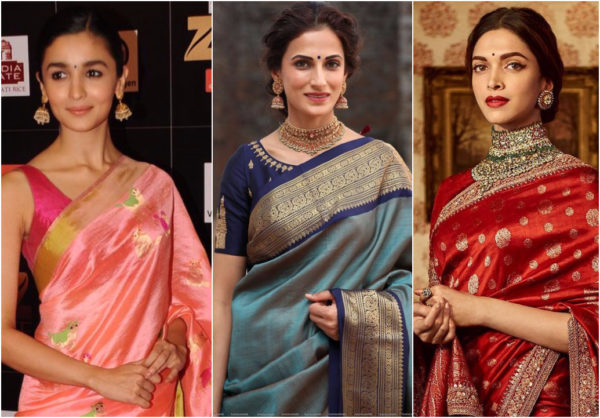
Walk into any saree shop in the South and you will hear the same words again and again: pattu, kanjeevaram, Gadwal, Uppada, kasavu. To a newcomer they can all sound like one thing, a shiny saree for a wedding. In truth each name points to a different town, a different loom and a different way of wearing silk. This guide explains the main South Indian silk sarees in plain language, so you know what you are looking at, what each one suits and how our favourite actresses wear them.
First, what does 'pattu' mean?
In Tamil and Telugu, pattu simply means silk. When someone says 'pattu saree', they usually mean a silk saree with some body and richness to it, the kind kept for functions, festivals and weddings. Kanchi pattu, Dharmavaram pattu and Pochampally pattu are all 'pattu' sarees, just from different weaving traditions.
It helps to know three things when you compare any silk saree:
- The weave: how the threads are woven, and whether the design is part of the cloth or printed on it.
- The border and pallu: often the heart of a South Indian silk saree. Many have broad, contrasting borders and a richly worked pallu.
- The weight and drape: a heavy silk stands out in pleats, while a light one flows. This decides how you will feel wearing it for six hours.
Kanjeevaram (Kanchipuram): the queen of silks
If one silk saree stands for the South, it is the kanjeevaram, named after the temple town of Kanchipuram in Tamil Nadu. You will see it spelt Kanchipuram, Kanchi pattu or kanjivaram too; all mean the same family of sarees. It is known for its weight, its lustre and its bold, temple-inspired motifs, and the saree is usually woven with a rich zari border.
A classic kanjeevaram is firm and substantial, which is why it is the default choice for a bride. Traditional colours run from deep maroon and temple-bright reds to greens, purples and mustard-gold. Newer versions come in softer pastels and lighter weights, so there is a kanjeevaram for almost every taste.
On our pages you can see how widely it is worn. Rekha in a maroon kanjeevaram saree shows the classic look at its best, while Rekha in a tissue kanjeevaram saree shows a lighter, shimmering take. For a modern spin, look at Tamannaah Bhatia's contemporary kanjeevaram ensemble. At weddings, Pooja Hegde in a kanjeevaram saree at her brother's wedding and Janani Bandla's deep purple Kanchipuram saree show how it carries a bridal occasion.
More looks worth a browse: Samyuktha Menon in a Kanchipuram saree, Neha Shetty in a Kanjeevaram saree and Honey Rose in a purple kanchi pattu saree.
[PHOTO: a classic maroon kanjeevaram showing the border and pallu clearly, from the post on Rekha in a maroon kanjeevaram saree]
Who should wear it?
Almost anyone, but think about the occasion. A heavy kanjeevaram suits weddings, engagement functions and big festivals. For a daytime event or a warm city, a lighter weight is far more comfortable. If you are petite, keep the border from overpowering you by choosing a medium border and a well-pleated drape.
Mysore silk: soft, smooth and understated
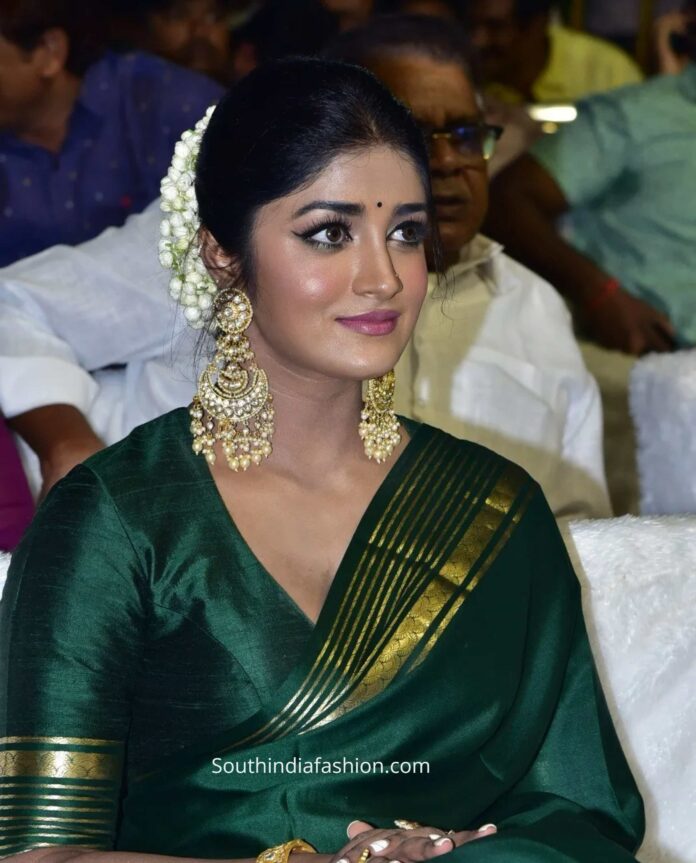
Mysore silk comes from Karnataka and is loved for its soft feel and gentle sheen. Compared with a kanjeevaram it is lighter and drapes more easily, with simpler designs and a quieter elegance. Many people reach for it when they want a silk saree that looks refined without feeling heavy.
It works well for office festivals, family functions and daytime celebrations. A lovely example on our site is Dimple Hayathi in a dark green Mysore silk saree, which shows how a plain, rich colour can look striking on its own.
Because the fabric is smooth, simple blouse designs suit it best. Our guide to plain blouse designs for silk sarees has ideas that let the saree stay the star.
Gadwal: a cotton body with a silk border
Gadwal sarees come from the town of Gadwal in Telangana. They are known for a distinctive construction: the body and the border are woven separately and then joined, and the borders are often in silk. The result is a saree that is lighter than a full kanjeevaram yet still looks rich, with a neat, firm fall.
This lightness makes Gadwal a favourite for people who want a traditional look that is easy to carry through a long day. The borders are often contrasting, so choosing a blouse that picks up the border colour is a simple way to look put together.
Many readers search for 'pattu sarees' and 'Gadwal silk', and you will often find the two sit side by side in a shop. If you are unsure, ask to feel the weight and look closely at where the border meets the body.
Uppada: light, graceful and detailed
Uppada sarees are woven in the coastal town of Uppada in Andhra Pradesh. They are prized for being very light and soft while still carrying delicate, detailed designs. Many people choose Uppada when they want something that feels airy but still looks special.
The lightness makes Uppada excellent for summer weddings, receptions and festive afternoons. A well-chosen Uppada looks graceful rather than heavy, and it pairs well with simple, elegant jewellery.
Dharmavaram: the temple-border favourite of Andhra
Dharmavaram, in Andhra Pradesh, has long been known for a bold, broad-bordered silk saree that is a staple of South Indian weddings. These sarees are usually rich and fairly heavy, with strong colours and wide zari borders, and they are commonly chosen for brides and the women of the family.
If you love the look of a kanjeevaram but want to try something with its own regional character, Dharmavaram is worth exploring. The saturated colours photograph beautifully, which is one reason you see them so often at weddings and festive functions.
Pochampally and ikat: geometry in silk
Pochampally, near Hyderabad, is famous for ikat, a technique in which the threads are dyed in a pattern before weaving. This gives the saree its soft, slightly blurred geometric designs, with diamonds, zigzags and stripes. No two ikat sarees are exactly alike, and that is part of their charm.
Ikat reads more modern and artistic than a heavy temple-border silk, and it is a favourite for pre-release events, store launches and stylish daytime looks. See Shivathmika Rajasekhar in an ikat silk saree at the Antora store launch and Lakshmi Manchu in an ikat silk saree to see how it styles.
Because the pattern is the star, keep the blouse and jewellery simple. A plain or lightly worked blouse in one of the saree's colours usually looks best.
[PHOTO: a Pochampally ikat saree with the geometric pattern clearly visible, from the post on Shivathmika Rajasekhar at the Antora store launch]
Kerala kasavu: cream and gold, with a quiet dignity
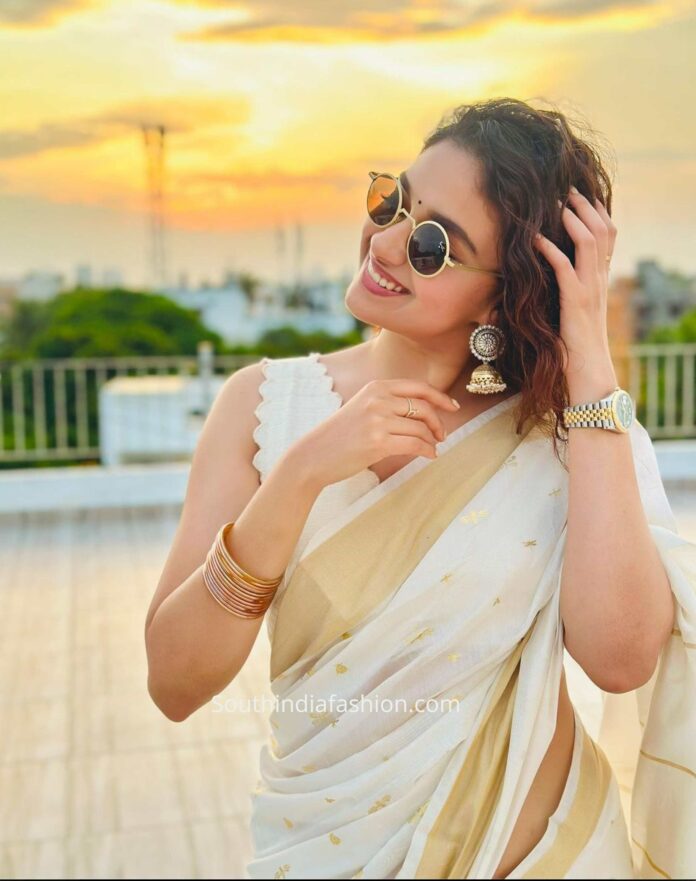
The kasavu saree is the traditional dress of Kerala, instantly recognised by its off-white or cream body and a gold border. It is worn for Onam, Vishu and weddings, and its beauty lies in its restraint. There is no heavy pattern, just clean colour and a shining border.
Kasavu is also a good choice if you find loud sarees overwhelming. A simple blouse, light gold jewellery and a neat bun or flowers in the hair complete the look. You can see it worn beautifully in Keerthy Suresh's Onam kasavu look and Anusree Nair in a Kerala saree and antique gold jewels.
A quick comparison
- Kanjeevaram: heavy, rich, bold borders; best for weddings and big festivals.
- Mysore silk: soft, light, understated; best for family functions and daytime.
- Gadwal: lighter body with a contrast border; best for long, comfortable days.
- Uppada: very light and delicate; best for warm weather and receptions.
- Dharmavaram: broad borders, strong colours; best for weddings and family occasions.
- Pochampally ikat: geometric patterns; best for stylish daytime events.
- Kerala kasavu: cream and gold; best for Onam, Vishu and simple elegance.
How to choose the right silk saree
Start with the occasion
A wedding calls for weight and shine, while a morning puja or office event suits something lighter. Think about how long you will be wearing the saree and how hot the venue will be.
Think about colour
Deep reds, greens and purples have always been favoured for traditional occasions. For a softer look, pastels and creams are popular, and you can see them in Sneha Prasanna's cream silk saree for Tamil New Year and Rashmika Mandanna's ivory silk saree. For brights, Pooja Hegde in a yellow silk saree and Raashii Khanna in a gold silk saree show how colour lifts a look.
Pick the blouse with care
The blouse can change the whole feel. A contrast blouse adds drama, as in Kushbu Sundar's black silk saree with a yellow blouse, while a matching blouse looks classic and calm.
Match the saree to your body and comfort
Heavier silks add volume, so if you prefer a slimmer line, lighter weaves with careful pleating can help. Comfort matters as much as looks: you will carry the saree for hours.
Silk sarees at events and weddings
Our readers often tell us they search for ideas by occasion. Silk sarees turn up at inaugurations and shop openings, where actresses favour fresh, bright colours, as in Krithi Shetty in a lime green silk saree and Payal Rajput in a pink silk saree. At weddings, guests often choose rich colours, such as Anusree Nair's yellow Kanchipuram saree and Anu Emannuel's magenta bridesmaid saree.
Caring for your silk saree
A good silk saree can last for decades if you look after it. The general advice is simple and widely followed:
- Dry-clean heavy silks rather than washing them at home.
- Store the saree wrapped in soft cotton or muslin, not plastic, so the fabric can breathe.
- Refold it along different lines every few months so the creases do not set and cut the zari.
- Keep it away from damp, direct sunlight and perfume sprayed directly on the fabric.
Specific care can vary with the weave and with family habits, so if you have an heirloom piece, ask a trusted weaver or saree cleaner for advice.
FAQ
What is the difference between kanjeevaram and other pattu sarees?
Pattu just means silk, so a kanjeevaram is one kind of pattu saree. It is distinguished by its origin in Kanchipuram, its weight and its bold borders. Other pattu sarees, like Dharmavaram or Gadwal, come from different towns with their own styles.
Which silk saree is best for a wedding?
Kanjeevaram and Dharmavaram are traditional favourites for brides and close family because of their richness. Guests have more freedom and may prefer lighter options like Uppada or Gadwal, depending on the season and venue. Customs vary by region and family, so check what your family usually follows.
Which silk saree is lightest to wear?
Uppada and Mysore silk are generally among the lighter choices, and many Gadwal sarees are also easier to carry than a heavy kanjeevaram. Weight can still vary between pieces, so feel the saree before you buy.
What is kasavu and when is it worn?
Kasavu is the cream or off-white Kerala saree with a gold border. It is worn for Onam, Vishu, weddings and other traditional occasions, and it is loved for its simplicity.
How do I wear an ikat saree so it looks modern?
Let the pattern speak. Pair it with a simple blouse in one of the saree's colours and keep jewellery light. Ikat suits daytime events, launches and relaxed festive gatherings.
How should I store a silk saree?
Wrap it in soft cotton or muslin, keep it in a cool, dry place, and refold it along new lines every few months. Avoid plastic covers and strong perfume near the fabric.