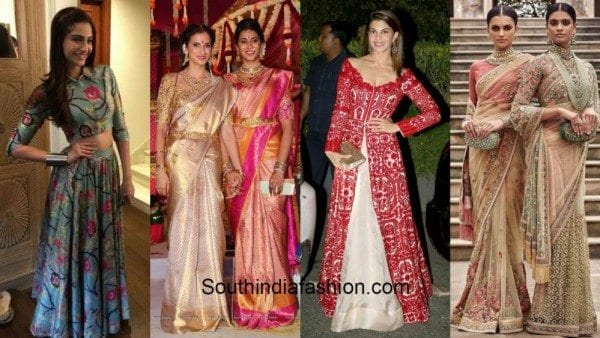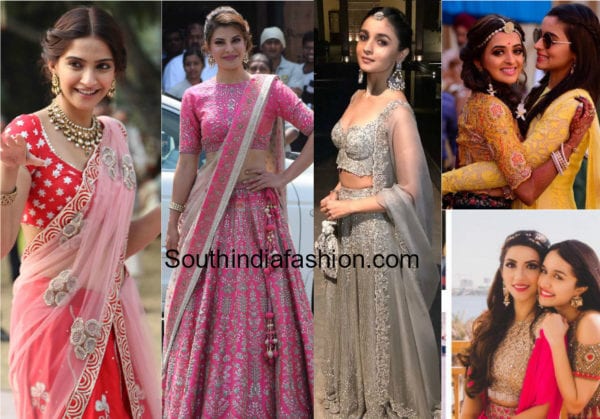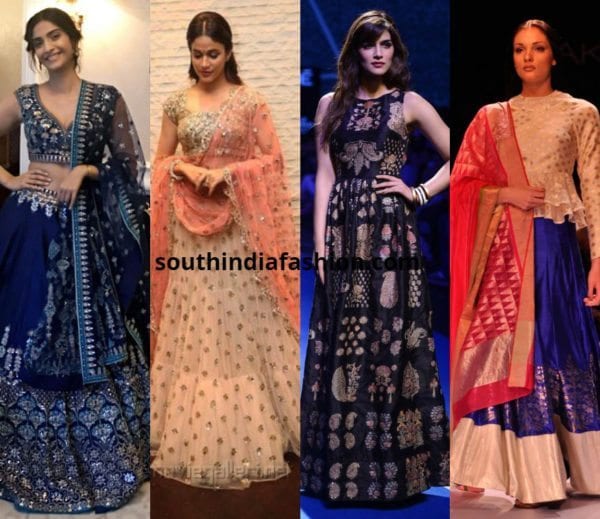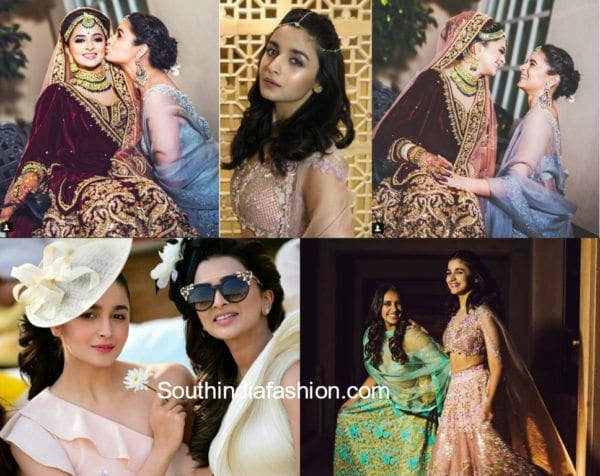
A South Indian wedding is rarely a single-day affair. Depending on the family and the community, you may be invited to a haldi or pasupu ceremony, a mehendi evening, a sangeet night, the muhurtham itself and a reception on the same weekend, sometimes spread over three or four days. Each function has its own mood, its own timing and its own dress code, spoken or unspoken. This guide walks you through what to wear to each one, with ideas drawn from the stars and families we have photographed at South weddings over the years.
Customs differ between Telugu, Tamil, Kannada and Malayali families, and between regions and even individual households, so treat everything below as a flexible guide rather than a rulebook. When in doubt, ask someone in the family or a friend who knows the couple.
First, the Golden Rules of Wedding Guest Dressing
- Do not compete with the bride. Avoid head-to-toe bridal red, and at many South Indian weddings avoid pure white or all-black as well, as they can be considered inauspicious. Check with the family if you are unsure.
- Match the function, not just the occasion. Morning rituals call for silk and tradition; evening events call for shimmer and drama.
- Think about the weather and the hours. A muhurtham can start at dawn and a hall can be warm, so choose breathable fabrics you can sit in comfortably.
- Plan your outfits as a set. If you are attending several functions, repeat jewellery and change the drape or colour, rather than buying an entirely new wardrobe.
Haldi (Pasupu) Ceremony: Bright, Easy and Stain-Friendly
The haldi is playful, messy and joyful. Turmeric stains, so this is not the day for your most precious silk. Think cotton, soft georgette, light chanderi or a salwar set you will not mind washing.
Colours that work
Yellow is the obvious choice and a lovely one, but too many guests in the same shade can look uniform, so consider marigold, mustard, orange, peach, pastel pink or fresh mint. Sunny colours photograph beautifully against the turmeric.
Outfit ideas
- A light cotton or mulmul saree with a contrast blouse
- A sharara or palazzo set that moves easily when you are dancing or being hugged
- A simple anarkali or kurta set with a dupatta you can drape or tuck away
Brides often set the tone themselves. See how Hansika Motwani twins with her groom in a hand painted sharara for her haldi for a relaxed, coordinated approach, and notice how the playful, hand-painted detail keeps the look festive without being heavy.
[PHOTO: Hansika Motwani and her groom in matching hand-painted sharara outfits at the haldi, from the Hansika Motwani haldi post]
Styling tips
Keep jewellery light, such as fresh flowers, small studs or a delicate necklace. Pick flat sandals or juttis, because haldi grounds can be slippery. Choose waterproof or minimal makeup and tie your hair back if you plan to join the fun.
Mehendi: Colourful, Boho and Comfortable
Mehendi is a long, relaxed afternoon or evening where you may sit for hours while henna dries. That means comfort comes first, and sleeves that will not smudge your fresh designs are a smart idea.
Colours that work
Greens are traditional, but do not feel limited to them. Rani pink, turquoise, purple, bright blue and multicolour prints all suit a mehendi mood. Tie-dye, bandhani and ombre work particularly well and photograph vibrantly.
Outfit ideas
- A ruffled or pre-draped saree that stays put while you sit
- A short kurta with palazzo or a crop top with a flowy skirt
- A tie-dyed or bandhani lehenga for a lighter, festive feel
For a bride's own take on the theme, look at Hansika Motwani's chic tie-dyed attire for her mehndi, which shows how a modern, relaxed silhouette can still feel celebratory.
[PHOTO: Hansika Motwani in her tie-dyed mehndi outfit, from the Hansika Motwani mehndi post]
Styling tips
Choose half or three-quarter sleeves, or ones you can push up easily. Statement earrings work better than heavy bangles, which can catch on drying henna. Keep a stole or a large scarf nearby, since your hands will be busy.
Sangeet: Glamour, Movement and Shimmer
The sangeet is the party of the wedding week. There will be performances, dancing and photographs, so pick an outfit that looks stunning and still lets you move. Evening functions suit sequins, mirror work, embroidery and rich dupattas.
Outfit ideas
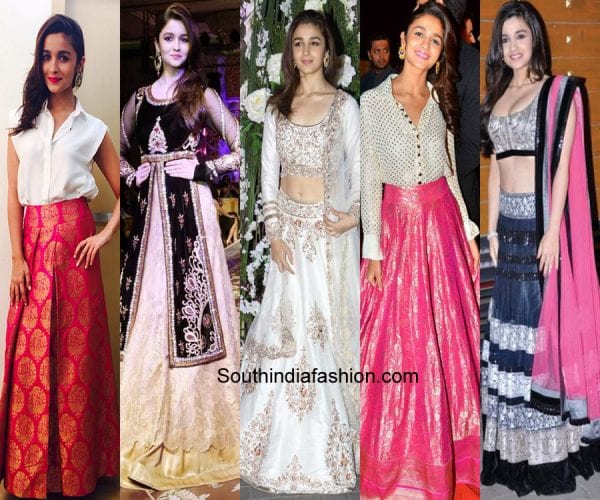
- Lehenga: A lightweight, flared lehenga is the classic sangeet choice, and a light net or organza skirt makes twirling easy.
- Sharara or gharara: Dance-friendly and elegant, a heavily embroidered sharara set is a strong alternative.
- Sequinned or shimmer saree: A sequinned or embellished saree with a statement blouse suits those who prefer drapes to skirts.
- Indo-western: A saree gown or a lehenga with a jacket gives a fusion look that still reads as Indian.
For inspiration, see Pooja Hegde in a designer lehenga at her brother's sangeet, Hansika Motwani's pink lehenga at her own sangeet and Tamannaah Bhatia in an ombre embellished lehenga. Keerthy Suresh's multi-coloured lehenga is a good example of how colour can be playful without becoming overwhelming.
[PHOTO: Pooja Hegde dancing in a designer lehenga at the sangeet, from the Pooja Hegde sangeet post]
Styling tips
Practise walking and twirling in your outfit before the day. Pin your dupatta at several points so it stays put. Wear comfortable heels or block heels, or carry flats for the dance floor. Bold lips or smoky eyes both work; pick one focal point rather than both.
Muhurtham: Silk, Tradition and Auspicious Colours
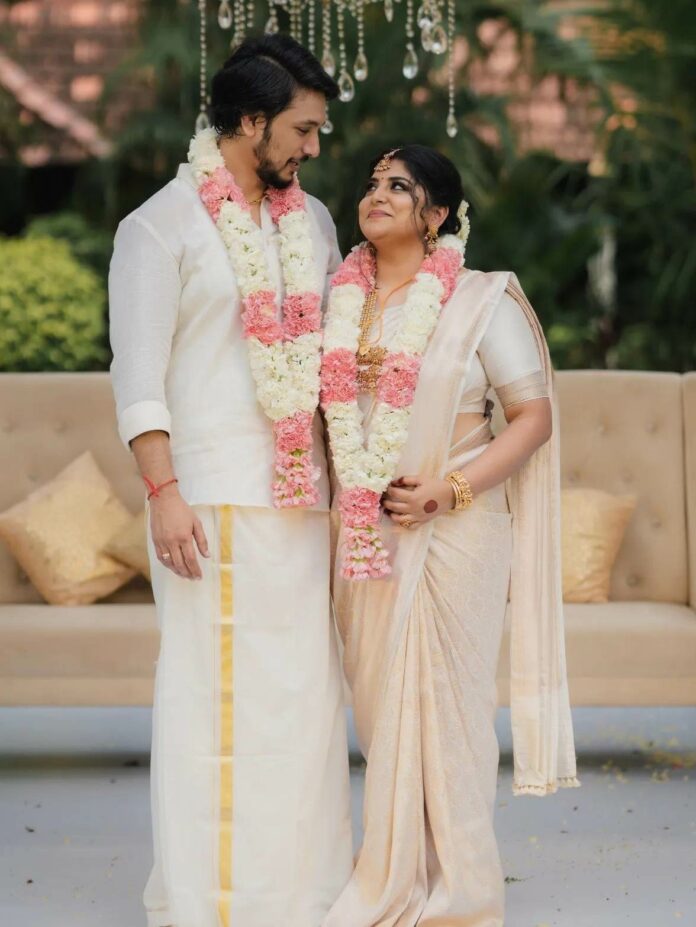
The muhurtham is the heart of the wedding and the most traditional of the functions. It often takes place in the morning, in a temple or hall, and guests are usually expected to dress in classic silk. This is the moment for kanjeevaram, Kanchipuram, pattu and Banarasi silks, and for half sarees if you are a younger guest.
Colours that work
Rich, auspicious colours are the safest and most beautiful choice: mustard and yellow, magenta, parrot green, peacock blue, maroon, purple and temple-gold borders. Avoid black and, in many families, white. Red is usually kept for the bride, so choose another jewel tone unless you know it is fine.
Outfit ideas
- A kanjeevaram or Kanchipuram silk saree with a contrast border
- A pattu saree with a zari border and a traditional blouse
- A pattu langa voni (half saree) for younger guests
- A Banarasi silk saree for a slightly more regal feel
Several of our posts show how well the muhurtham tradition translates across stars and families. See Janani Bandla in a deep purple Kanchipuram silk saree, Anusree Nair in a yellow Kanchipuram saree, Pooja Hegde in a kanjeevaram saree and Shalini Kandukuri in a purple silk saree. For younger guests, Sreeleela's pattu langa voni and Kalyani Priyadarshan's yellow silk saree show the same tradition in a fresh, youthful way. If you want something a little different from classic silk, Nisha Aggarwal's pink satin silk saree and Pooja Hegde's Banarasi silk saree are lovely options.
[PHOTO: Janani Bandla in her deep purple Kanchipuram silk saree, from the Janani Bandla wedding post]
Styling tips
- Choose a blouse that suits the saree: a matching silk blouse with elbow-length sleeves is traditional, and a contrast blouse adds personality.
- Wear temple jewellery or gold, such as haaram, jhumkas and bangles.
- Add fresh jasmine or mallige in your hair for a classic touch.
- Wear footwear that is easy to remove, since temple and hall ceremonies often require it.
If you are choosing a blouse for the occasion, our guides to bridal aari and maggam work blouse designs and bridal blouse sleeve designs for the South Indian winter wedding season are full of ideas you can adapt for guest wear.
Reception: Evening Elegance
The reception is typically the most glamorous and relaxed event, held in the evening with a longer guest list. You have more freedom here to experiment, from heavier sarees to gowns and fusion styles.
Outfit ideas
- Embellished or organza saree: A sheer, sequinned or lightly embroidered saree in a pastel or jewel tone suits an evening setting.
- Lehenga or sharara: Heavier fabrics like velvet, silk or raw silk work well for winter receptions.
- Gown or saree gown: A fusion option for guests who prefer something less traditional.
- Designer ensembles: Many couples and guests choose designer labels for the reception.
Take a look at Varun Tej and Lavanya in Manish Malhotra ensembles at their reception, Sneha Reddy's ivory organza saree and Sneha Reddy's powder blue glittery gown. Raashi Khanna's red saree at a reception and Pinky Reddy's blue sequinned saree show how a single bold colour can make a strong statement, while Katrina Kaif's powder blue stone-work saree proves that a soft shade can be just as dramatic.
[PHOTO: Sneha Reddy in her ivory organza saree at a wedding, from the Sneha Reddy organza saree post]
Styling tips
Evening lighting loves shimmer, so choose sequins, mirror work or zari. Balance a heavily worked saree with a simple blouse, or the other way around, so the look is never overloaded. Statement earrings with a lighter necklace, or the reverse, keep the jewellery in proportion.
Planning Your Outfits Across All Functions
If you are attending several events, a little planning saves money and stress.
- Mix and match blouses. One good silk saree and two or three blouses can give you quite different looks.
- Repeat jewellery cleverly. A set of gold jhumkas and a good necklace can work across the muhurtham and reception.
- Rent or borrow. Lehengas and heavy sarees for one-time functions are often easier to rent than to buy.
- Try everything on early. Get blouses stitched and altered well before the event, since tailoring queues get long in wedding season.
- Carry a backup. Safety pins, a spare dupatta and flats can rescue any outfit.
What to Wear if You Are a Bridesmaid or Close Family
Close friends and family often coordinate their looks, and a colour theme is common. Look at Anu Emmanuel's bridesmaid look in a magenta silk saree for a bright, celebratory idea, and Vishnu Manchu's family in traditional outfits to see how a whole family can dress in harmony without looking identical. Our wedding guest look by Shriya Bhupal is another helpful reference.
Beyond the Wedding: Engagements and Other Functions
You may also be invited to an engagement or a pre-wedding event. These tend to sit between the haldi and the muhurtham in formality. Our coverage of Sharwanand and Rakshita Reddy's engagement, Lavanya Tripathi and Varun Tej's engagement and Hanshitha Reddy's green sharara suit shows how guests dress for these semi-formal evenings. For winter weddings specifically, Ramya Krishnan's mustard sharara suit and Kajal Aggarwal's sage green kurta set prove that a well-cut suit can be as elegant as a saree.
FAQ
Can I wear a lehenga to the muhurtham?
It depends on the family and the venue. Many South Indian muhurthams are traditional and morning-based, so silk sarees and half sarees are the usual choice. A lehenga is more common at the sangeet and reception. If you want to wear one earlier, choose a silk or raw silk lehenga in an auspicious colour and check with the hosts.
Is it okay to wear black or white to a South Indian wedding?
In many families black and white are avoided, especially for the main ceremony, because they can be seen as inauspicious. Some modern families are relaxed about it, particularly for the reception. The safest approach is to choose a rich jewel tone or ask someone close to the family.
What colour should I avoid wearing to a wedding?
Avoid bridal red unless you know it is acceptable, and try not to match the bride's exact colour. Check with the family on black and white. Beyond that, most bright, festive shades are welcome.
What is the best fabric for a hot or humid wedding?
Lightweight silks, cotton silks, georgette, chanderi and mulmul are comfortable choices. Avoid heavy, non-breathable fabrics for long daytime ceremonies, and carry a light stole for air-conditioned halls.
How should I dress for a temple wedding?
Keep the outfit modest and traditional, with covered shoulders and a well-draped saree or a salwar set with a dupatta. Wear footwear that is easy to remove and avoid very short or sheer outfits.
How many outfits do I need for a multi-day wedding?
One outfit for each function is ideal, but you can repeat pieces by changing blouses, dupattas and jewellery. A silk saree for the muhurtham, a lehenga or shimmer saree for the sangeet or reception, and a light set for the haldi or mehendi will cover most invitations.