If you watch how South Indian actresses are styled for a wedding, a film function or a festival, you will notice something. The saree gets the first glance, but the back of the blouse gets the second, and often the longer one. A well-chosen back neck can turn a simple pattu or kanjeevaram into a look people photograph from behind. This guide walks you through the main back neck styles, what each one suits, and how to choose without second-guessing yourself on the day.
Why the back neck matters so much
The saree drapes over the front and falls down the back, so the blouse back is one of the few places where you see the garment's design clearly. For South Indian looks, where silk sarees are rich but often simply woven, the blouse is where much of the personality goes. Maggam work, aari embroidery, zari borders, tassels and cut-outs all tend to land on the back.
A good back neck does three things. It balances the saree, so a heavy kanjeevaram gets a neckline with enough detail to match it. It suits your build and comfort, because you will sit, hug people and pose in it for hours. And it fits the occasion, since a daytime puja and a sangeet do not call for the same depth.
The basic shapes
Almost every back neck design is a variation on a handful of shapes. Once you can name them, shopping and briefing a tailor becomes much easier.
Round and U-shaped back
The U-shaped back is the all-rounder. It scoops down gently and follows the natural curve of the back. It is easy to wear, easy to stitch, and flatters most body types. It also works well as a base for borders, piping or a line of embroidery along the edge. For daily wear and conservative family functions, a modest U is hard to beat. You can see plenty of simple everyday options in our simple modern blouse designs for daily use.
V-shaped back
The V-neck elongates the back and neck, and the point of the V draws the eye downward. It can be shallow for a subtle effect or deep for a bolder one. A V back pairs well with a wide zari border, because the angled lines echo the geometry of temple-style borders. It is also a good choice if you want something a little different from a U but still very wearable.
Deep back
A deep back plunges lower and is usually reserved for parties, receptions and engagement evenings. Because so much of the back is exposed, the fit matters enormously. A deep back needs a firm cut and good lining so that it stays in place and does not gape. Many of the ideas in our party wear back blouse designs use this shape, often softened with strings or a bit of embellishment.
Boat or wide-scoop back
This style runs wide across the shoulders and dips only moderately, giving a graceful, structured look. It suits those who want coverage but still want the back to look designed. A boat-style back is popular with heavy silk sarees because it feels formal and balanced.
Square back
A square or rectangular back has clean corners and a modern, architectural feel. It works well with geometric embroidery and with sarees that have a strong, clean border. It can look sharp with a plain silk, where you want the structure of the blouse to stand out.
Halter back
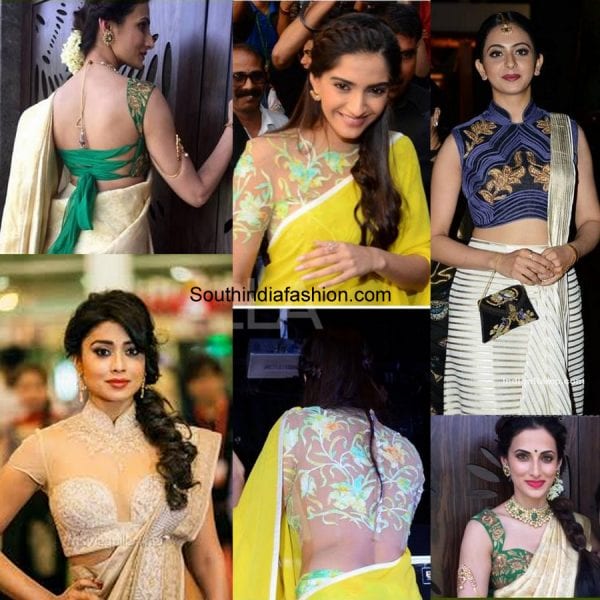
A halter ties or fastens at the neck and leaves the shoulders and much of the back open. It is a statement shape, often chosen for festive and party looks. It tends to suit people comfortable with a lot of exposed back and shoulder, and it needs a well-fitted front so the garment stays secure. For a recent festive example, see how a halter works in Alia Bhatt's green saree with an embellished halter blouse for Diwali, and for a more subdued take, Priya Mani's black printed saree with a halter neck blouse.
Detail styles that change the whole look
Beyond the basic shape, it is the detailing that makes a back neck memorable. These are the ideas you will see most often.
Keyhole and cut-out backs
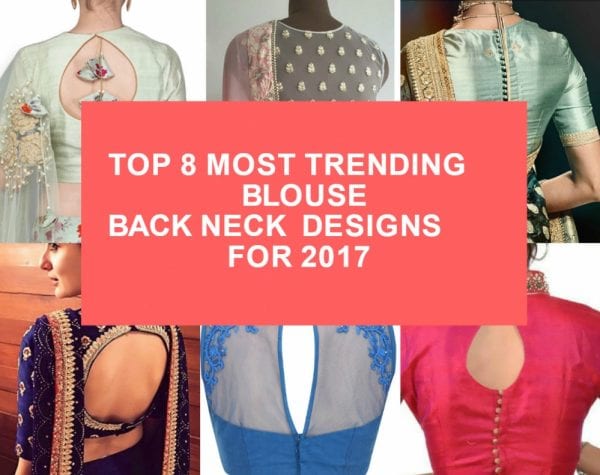
A small keyhole, teardrop or round cut-out between the shoulder blades adds interest without a deep neckline. It is a good middle path: more design than a plain back, less exposure than a plunge. Cut-outs can be framed with embroidery or piping to make them look deliberate rather than casual.
Illusion and net backs
An illusion back uses sheer net or a similar fabric, usually with the embroidery sitting on top, so the neckline appears to reach higher or take a different shape than the actual cut. It lets you enjoy a delicate, open look while keeping more coverage than it appears. If you like the idea, our collection of illusion back neck designs for blouses shows many variations.
Bow and tie-up backs
A bow at the back neck or at the centre of a deep cut gives a soft, playful touch. Strings with tassels or beads can do a similar job. These work nicely on pastel silks and on lighter festive sarees. Our trendy bow back saree blouse designs and the post on bridal silk blouse designs with customised tassels show how much character a small detail can add.
Embroidered and worked backs
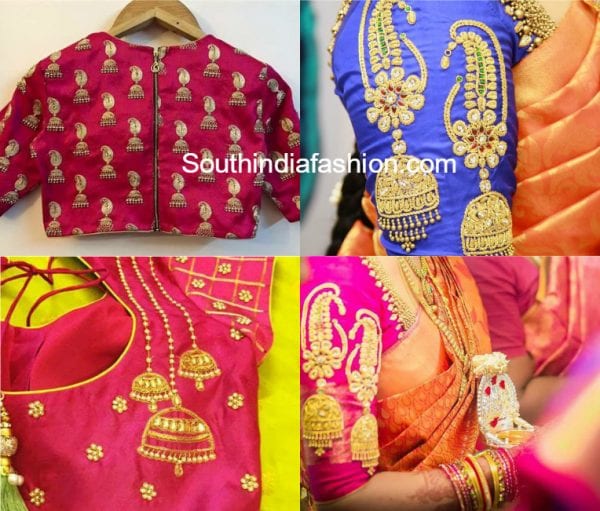
Some of the most beautiful back necks are really about the work rather than the cut. Maggam work, aari embroidery, zardosi and hand embroidery can turn even a simple scoop into the centrepiece of the outfit. If you are drawn to this route, browse aari work blouse designs for silk sarees and maggam work blouse designs. For something more handcrafted, see hand embroidered blouse designs by Parama.
Cape and layered backs
A cape-style back adds a layer of fabric that drapes over the shoulders and back, giving a modern, dramatic silhouette. It suits those who want something contemporary with a traditional saree. See our cape style blouse designs for ideas.
Matching the back neck to the occasion
A useful way to decide is to start from the event rather than the design.
- Daily wear and office: a modest U, round or boat back, minimal detailing, comfortable fabric.
- Festivals and pujas: a medium-depth U or V, perhaps with a border or a little embroidery. Our festive saree blouse designs are a good starting point.
- Onam and kasavu looks: usually cleaner and more understated, in keeping with the simple elegance of the saree. See Kerala saree blouse designs for Onam.
- Weddings (as a guest): a well-finished back with some work, such as a keyhole, a worked U or a tasteful illusion.
- Weddings (as the bride): a rich, worked back with heavy detailing. See the sections below.
- Parties and receptions: deep backs, halters, bows and cut-outs.
Bridal back necks
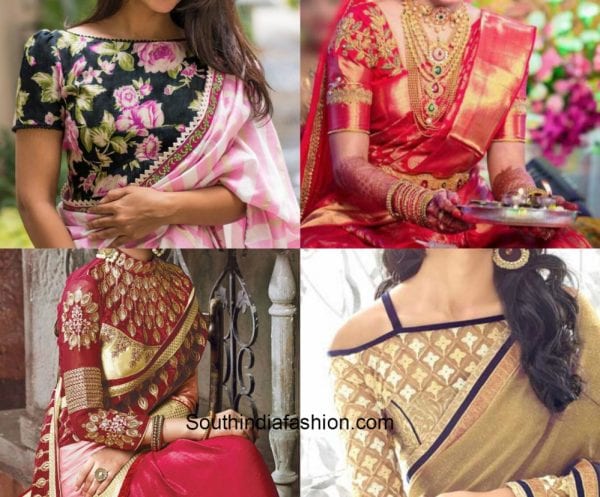
Bridal blouses are where back necks get the most attention, because the bride is photographed from every angle and the back is on display during rituals and walks. Brides often choose a U, V or boat shape and then load it with detail: maggam work, zari, stones, tassels and sometimes motifs that echo the saree border.
If you are planning bridal looks, these are worth a browse: latest back neck blouse designs for every bride, elegant new bridal blouse back neck designs, and wedding blouse designs for kanjeevaram sarees. For heavily worked options, see maggam work bridal blouse designs by Sruthi Kannath.
[PHOTO: a clear back view of a bridal pattu blouse with detailed maggam work, from the post on latest back neck blouse designs for every bride]
Pairing with the saree
The simplest rule is balance. A heavily woven or brocaded saree usually looks best with a back neck that has some detail but is not fighting for attention. A plain or lightly woven saree can handle a more elaborate back.
- Kanjeevaram and pattu: these suit structured shapes such as U, V, boat and square, with zari or maggam detailing that picks up the border colour.
- Lighter silks and Uppada: these work well with bow backs, keyholes and softer embroidery.
- Net and organza sarees: these can carry illusion backs, halters and cut-outs, since the whole look is already airy.
- Contrast or matching: a contrast blouse makes the back a feature, while a matching blouse makes the overall look smoother and lets the saree lead.
For more on plain and work blouses with silks, see plain blouse designs for silk sarees and work blouse designs for silk sarees.
Practical tips before you stitch
- Fit first, design second. A beautiful design in a poor fit never looks good. Give your tailor clear measurements and ask for a trial.
- Think about sitting and moving. If you will be at an event for hours, make sure the back neck stays comfortable and secure.
- Check how it looks with your hair and jewellery. A deep back with a long braid, a low bun or a necklace that falls at the back all change the effect.
- Use lining. Good lining keeps the blouse shaping its place and protects delicate embroidery.
- Bring pictures. Showing your tailor a reference photo is far more reliable than describing a design in words.
- Consider the saree pallu. The way your saree falls over the shoulder can hide or reveal the back, so plan for it. A pinned or pleated pallu shows much more of the back than a loose one.
A note on trends
Back neck fashions come and go, but the underlying shapes stay the same. What changes is the detailing: a few years of heavy stonework, then a return to hand embroidery, then cut-outs, then bows. If you want to see how styles have moved, our posts on latest blouse back neck designs and off-beat and unique blouse back neck designs for pattu blouses show a good range. A classic shape with a detail you love will outlast any trend.
FAQ
Which back neck design suits most people?
A U-shaped or round back is the safest choice. It is comfortable, flattering on most body types, and works for both everyday and festive wear. You can dress it up with borders or embroidery when needed.
What back neck is best for a heavy kanjeevaram saree?
A structured shape such as a U, V, boat or square back usually works well. Add detail, like zari or maggam work, that echoes the saree border, but keep it balanced so the blouse does not overpower the saree.
Can I wear a deep back neck if I am not comfortable with too much exposure?
Yes. Consider a keyhole, an illusion back or a moderately deep V. These give you a designed look with more coverage. You can also use a net layer or strings to soften a deeper cut.
How deep should a bridal blouse back neck be?
It varies with the family, the ritual and your own comfort. Many brides choose a moderate depth with rich work rather than a very deep cut. Ask your tailor to show you a sample against your back before finalising.
How do I keep a deep or halter back neck from slipping?
Fit and lining are the answer. Make sure the blouse is cut closely at the sides and the underarms, use good lining and have the tailor adjust the ties or hooks so they sit securely. A trial fitting is important for these styles.
Does the back neck design change with the saree fabric?
It can. Heavier silks suit structured, detailed backs, while lighter fabrics such as net and organza can carry airier designs like illusion backs, halters and bows. Match the weight of the blouse detail to the weight of the saree.